

If you've ever stood in a supplement aisle - or scrolled through one - you've probably wondered whether collagen and protein powder are essentially the same thing, just marketed differently. They're both proteins, both come in powder form, both get stirred into drinks. So what actually separates them, and do you need both?
The short answer is that they're not interchangeable. The longer answer is worth understanding, because the difference changes how you use them and what you can reasonably expect from each.
They're both proteins - but that's where the similarity ends
Protein is a macronutrient. Your body needs it in meaningful quantities every day to build and repair muscle tissue, produce enzymes and hormones, support immune function, and carry out basically every structural and functional process in the body. When people talk about "hitting their protein," they're talking about meeting a daily threshold that keeps all of that running properly.
Protein supplements, like whey, casein, pea, rice, hemp, are concentrated sources of complete or near-complete protein designed to help you meet that threshold. They contain all or most of the essential amino acids your body can't produce on its own, making them useful for muscle recovery, satiety, and general dietary protein support.
Collagen is also a protein, but it's a specific one. It's the most abundant protein in the human body, found in skin, bones, tendons, ligaments, cartilage, and connective tissue.
Structurally, it's what holds everything together, the scaffolding underneath your skin, the cushioning in your joints, the tensile strength in your tendons. And unlike whey or pea protein, collagen has a very specific amino acid profile dominated by glycine, proline, and hydroxyproline, amino acids that are largely absent from most other protein sources.
Why collagen isn't a protein replacement
This is where people sometimes get confused. Because collagen is technically a protein, there's a temptation to treat it as interchangeable with a standard protein supplement. It isn't.
Standard protein supplements are designed to support muscle repair, recovery, and your overall daily protein intake. They're broad-spectrum. Collagen is specific. Its amino acid profile, dominated by glycine, proline, and hydroxyproline, which are largely absent from most other protein sources, is precisely what makes it valuable. These are the building blocks your body needs to produce and maintain its own collagen, support skin structure, cushion joints, and strengthen connective tissue.
No other protein source provides them in meaningful quantities. Which is exactly why collagen fills a gap that a standard protein supplement, no matter how good, simply wasn't designed to fill.
What collagen does instead is provide the specific building blocks your body needs to produce and maintain its own collagen, which is a different job entirely. Think of it less like fuelling your muscles and more like maintaining the infrastructure underneath everything else.
What collagen actually does
Your body produces collagen naturally, but that production declines with age - steadily from your mid-20s onwards, and more rapidly after 40. UV exposure, stress, smoking, and poor diet all accelerate the decline. The effects show up gradually: skin that loses firmness and elasticity, joints that feel less cushioned, hair that thins, nails that break more easily.
Supplementing with collagen gives your body a concentrated source of the amino acids it needs to support its own collagen synthesis. It's not an overnight fix, and it's not magic. It's a daily input that compounds.
The type of collagen matters too. There are over 28 types of collagen in the human body, but types I, II, and III make up the vast majority. Type I is the most abundant, found primarily in skin, tendons, and bone. Type II is concentrated in cartilage. Type III is found alongside type I in skin and blood vessels. A collagen supplement that covers all three is giving your body the broadest possible range to work with.
So do you need both?
For most people, yes, but for different reasons.
A standard protein supplement is doing one job: helping you meet your daily protein requirements if you’re not already, for muscle maintenance, recovery, and general health.
Collagen is doing something else: providing targeted support for the specific structural proteins your body relies on for skin, joints, hair, and connective tissue. They work on different systems and they complement each other rather than compete.
The practical reality is that most people get reasonable amounts of general protein through food - meat, eggs, dairy, legumes - but very little collagen. Collagen-rich foods like bone broth, skin-on cuts of meat, and organ meats have largely disappeared from modern diets. Supplementing fills that gap in a way that food alone often doesn't.
What to look for in a collagen supplement
Not all collagen supplements are the same. Hydrolysed collagen, also called collagen peptides, has been broken down into smaller chains of amino acids that are easier for the body to absorb. This is what you want to see on the label.
Source matters too. Bovine collagen is the most widely used and most researched, and it covers types I and III well. Marine collagen is predominantly type I. Choosing a supplement that specifies the types of collagen included gives you a clearer picture of what you're actually getting.
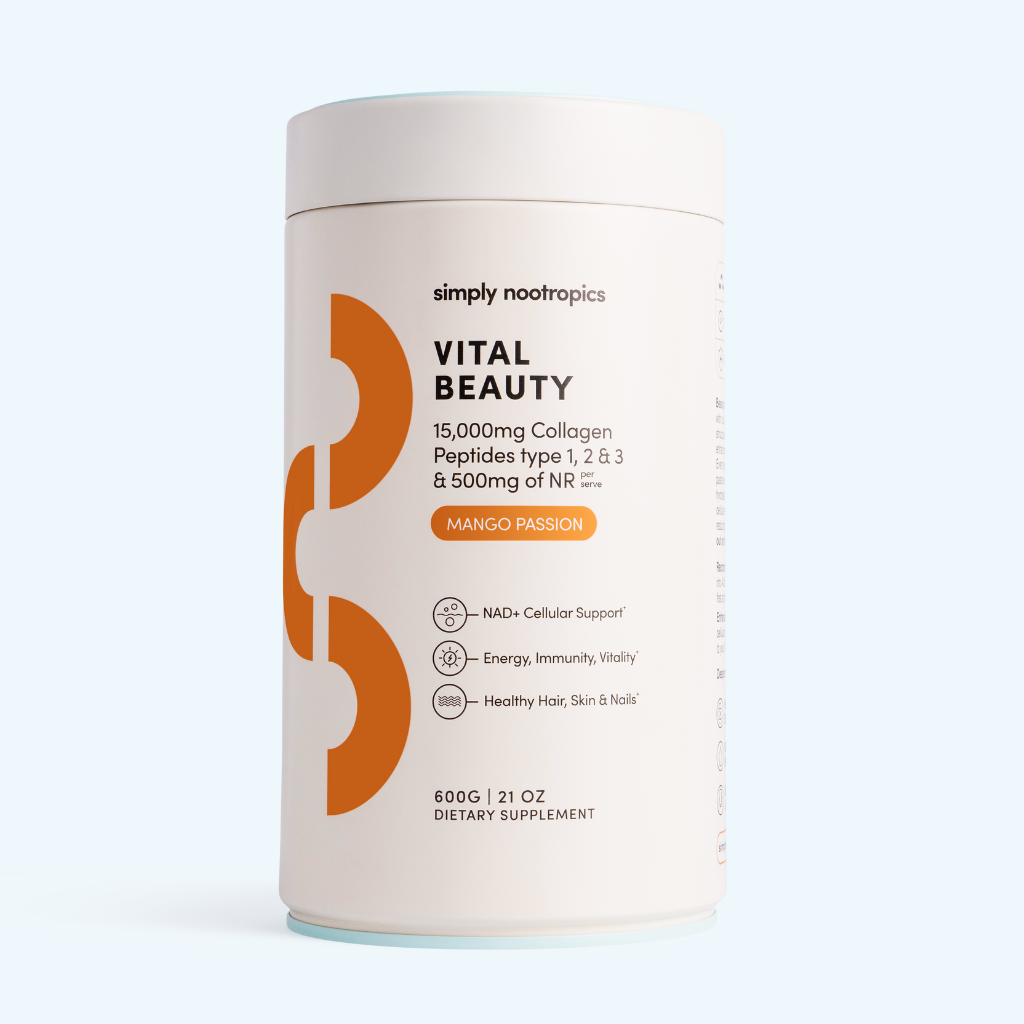
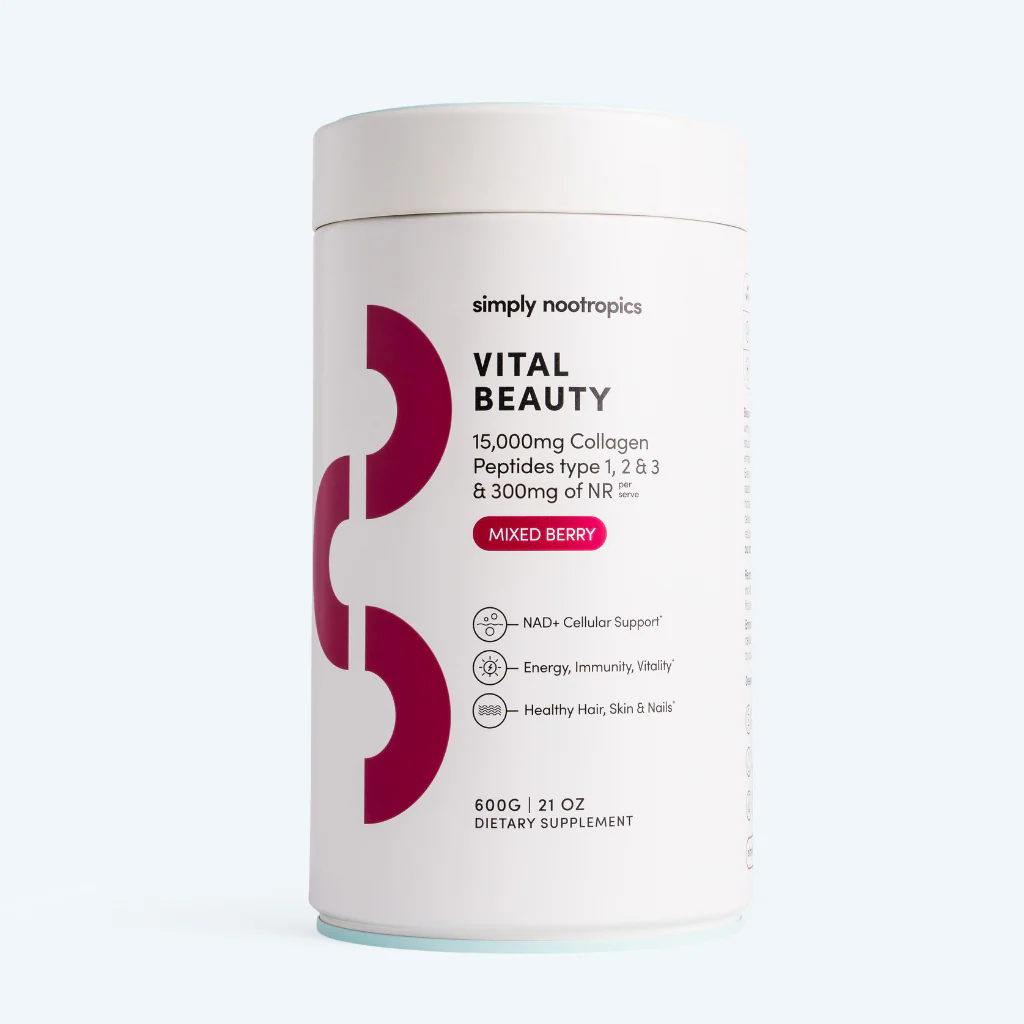
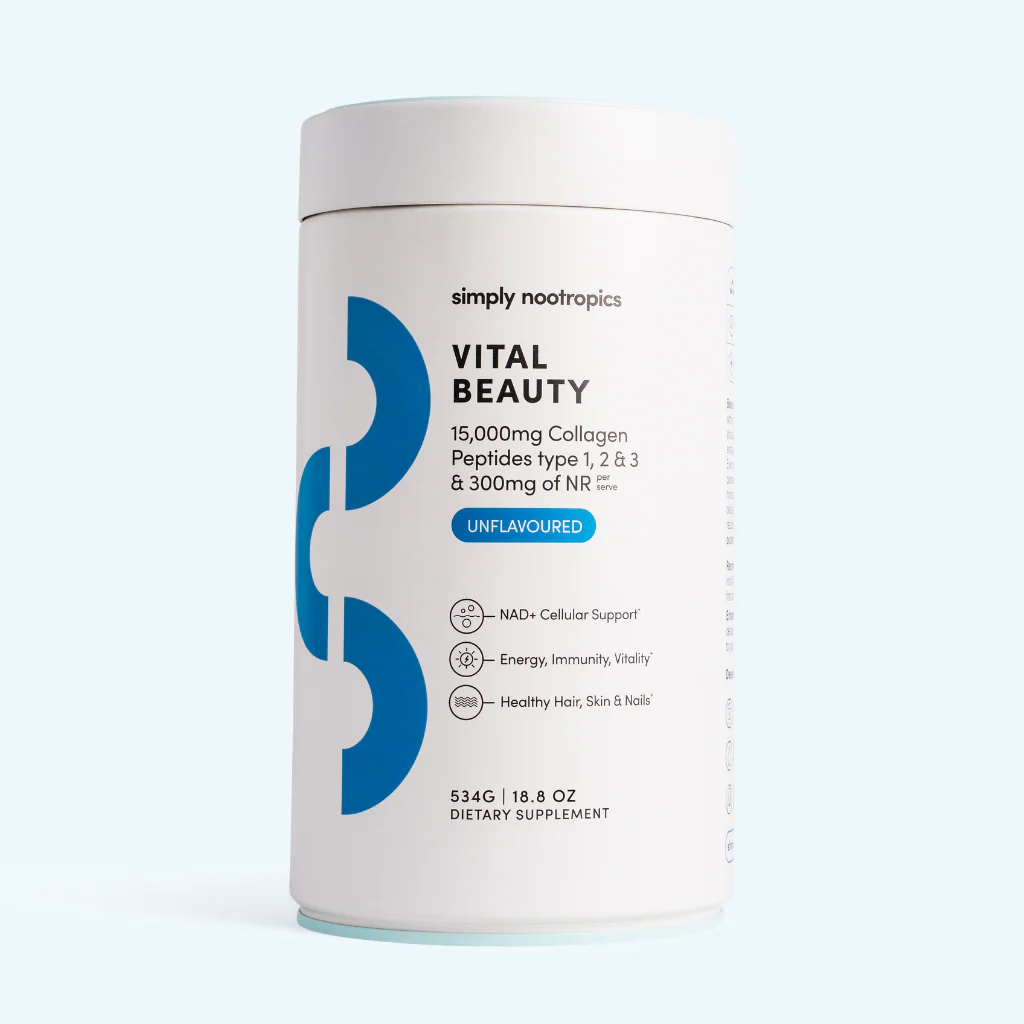
Vital Beauty contains hydrolysed bovine collagen across types I, II, and III (the full structural range) in a powder that dissolves completely into warm or cold drinks without affecting taste. It comes in Unflavoured, Mixed Berry, and Mango Passion, so it works however your routine works, whether that's a morning smoothie, a warm chai, or just water.
The goal with collagen is consistency. A single serve isn't going to do much. A daily serve of Vital Beauty, taken regularly over weeks and months, is where the results actually show up, and the easiest way to stay consistent is to make it part of something you're already doing every morning.