Light is the most powerful signal your body receives about what time it is. Not a clock on the wall, not a scheduled alarm; light hitting the retina is what actually tells your circadian system whether to be awake or asleep, and when to make the shift between the two.
Understanding why light has such an outsized effect on sleep starts with understanding how the body keeps time, and how easily that system can be thrown off by the conditions most people now live in.
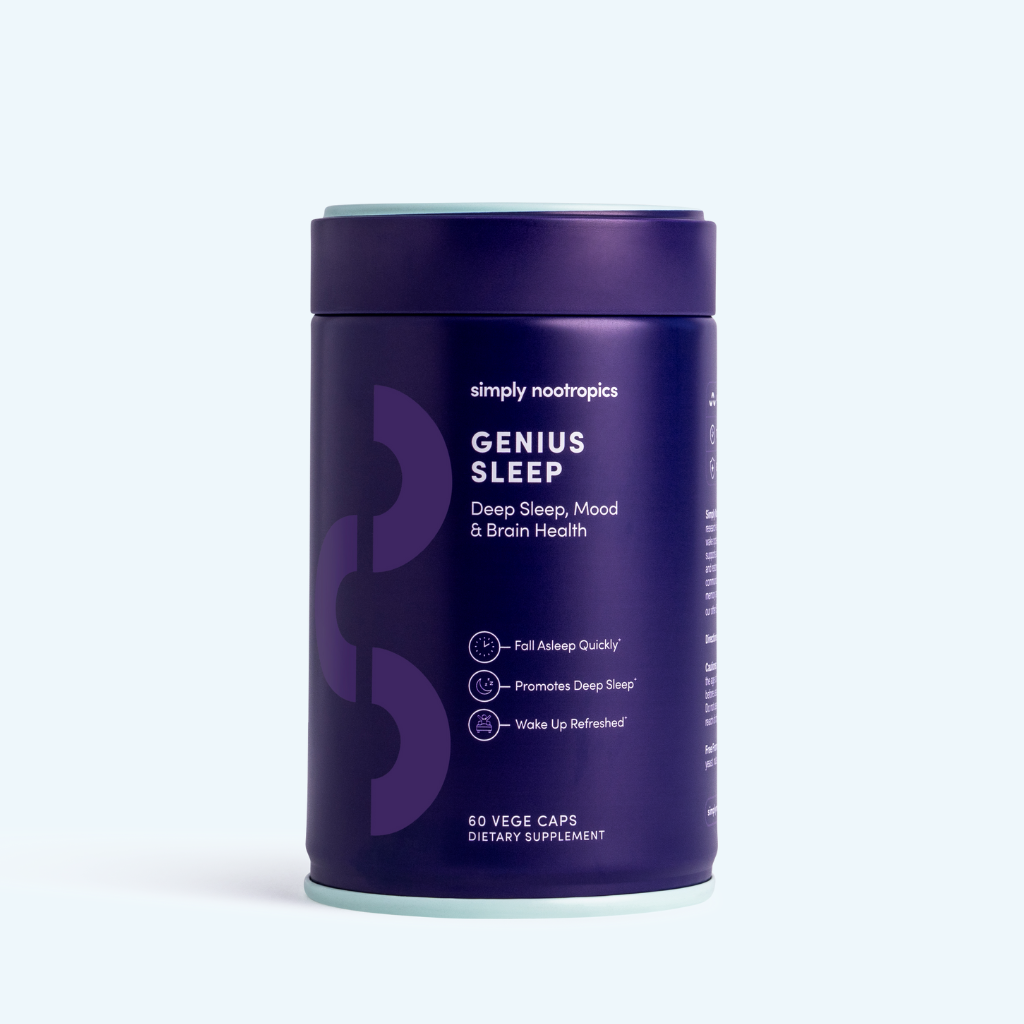
It's also why a formula like Genius Sleep is designed to work with your circadian biology rather than around it.
Your internal clock and why it needs resetting
Every cell in your body runs on a roughly 24-hour cycle, governed by a set of clock genes that switch on and off in a predictable rhythm. The master clock coordinating all of this is a tiny region of the brain called the suprachiasmatic nucleus, or SCN, which sits just above where the optic nerves cross.
It receives direct input from specialised cells in the retina, cells that respond specifically to light, entirely separate from those involved in vision.
The SCN uses light information to synchronise your internal clock with the outside world. Without it, your natural rhythm drifts. Research on people living in isolation from light cues shows the body defaults to a cycle slightly longer than 24 hours, which means the clock needs daily light input to stay on schedule. Miss that input consistently and the internal timing of sleep, hunger, mood, and metabolism starts to drift out of sync.
This matters more than most people realise. Circadian rhythm isn't just about when you feel sleepy. It coordinates the timing of hormone release, immune activity, cellular repair, and metabolism. When the clock runs late or becomes irregular, the downstream consequences extend well beyond tiredness.
Morning light and why it matters more than most people think
Bright light exposure in the morning - ideally within an hour of waking - is one of the most reliable ways to anchor your circadian rhythm. It tells the SCN that it's morning, triggering a cascade that sets the timing for everything downstream: when cortisol peaks, when you'll feel naturally alert, and critically, when melatonin will rise that evening.
The mechanism matters here. Light suppresses melatonin production, and morning light exposure accelerates how quickly melatonin is cleared from the system. The earlier and more sharply melatonin drops in the morning, the more reliably it rises again in the evening at the right time.
People who get consistent bright morning light tend to feel sleepy earlier at night and fall asleep more easily, not because they're physically tired from being outside, but because their melatonin timing is properly calibrated.
Natural light is significantly more powerful than indoor lighting for this purpose. Even on an overcast day, outdoor light registers at 10,000 lux or more. Most indoor environments sit somewhere between 100 and 500 lux.
For people who struggle to fall asleep at a reasonable hour, or who wake feeling unrefreshed, consistent morning light exposure is often the most underrated first step.
Blue light at night: why it disrupts more than just sleep onset
The same retinal cells that benefit from morning light become a liability at night. ipRGCs are most sensitive to short-wavelength blue light, which happens to be the dominant wavelength emitted by phones, tablets, and computer screens. Evening exposure to these devices sends a clear signal to the brain that it's still daytime, suppressing melatonin and delaying the onset of the biological night.
The effects go beyond making it harder to fall asleep. When melatonin onset is pushed later, the body's entire preparation for deep sleep shifts with it, the drop in core body temperature, the shift in autonomic nervous system activity, the rise in growth hormone that typically occurs in the first sleep cycle.
If you still have to wake at the same time, you're cutting short the tail end of your sleep, which is disproportionately rich in REM. The result isn't just tiredness. It's lighter, less restorative sleep overall, with impaired memory consolidation and emotional regulation as downstream consequences.
Dimming screens and reducing overhead lighting in the hour or two before bed partially addresses this. Blue light filter settings help at the margin. But the most effective intervention is simply less light exposure in the evening; lower intensity, warmer colour temperature, and a genuine wind-down period in low light rather than scrolling until the last possible moment.
Where Genius Sleep fits in
Managing your light environment is the foundation. But for many people, especially those navigating stress, irregular schedules, or the age-related changes in sleep architecture that become more pronounced from the mid-thirties onward, the biological machinery that translates circadian cues into deep, restorative sleep needs additional support.
Genius Sleep was formulated to work with your body's natural sleep architecture rather than override it. Where light exposure sets the timing, Genius Sleep supports the biological conditions that allow deep, restorative sleep to actually happen once that timing is right.
Its seven ingredients cover the full picture. Reishi Mushroom Extract and Passionflower Extract calm the nervous system and support GABA levels, making it easier for an overstimulated brain to wind down. L-Theanine promotes relaxation without sedation, while L-Tryptophan supports the body's own melatonin production, directly reinforcing the circadian signalling that consistent light exposure initiates.
On the restorative side, Magnesium Bisglycinate addresses one of the most widespread nutritional gaps affecting sleep, supporting the deep sleep stages where cognitive consolidation and physical repair happen. Tart Cherry Extract contributes additional tryptophan and amino acids that support both sleep quality and brain health. And Zinc Gluconate supports the neurotransmitter function that keeps memory and learning performing well - even while you rest.
Light sets the schedule. Genius Sleep helps your body keep it.