


Your gut and your heart might seem worlds apart, but they're in constant conversation. And what they're saying to each other matters more than you might think.
We've spent decades viewing the body as a collection of separate systems: digestive here, cardiovascular there, brain floating somewhere above it all. But the more we learn, the more we realise everything's connected. Your gut isn't just breaking down last night's dinner. It's producing compounds that influence your heart rhythm, your blood pressure, and your risk of cardiovascular disease.
So how exactly does what's happening in your digestive system affect what's happening in your chest?
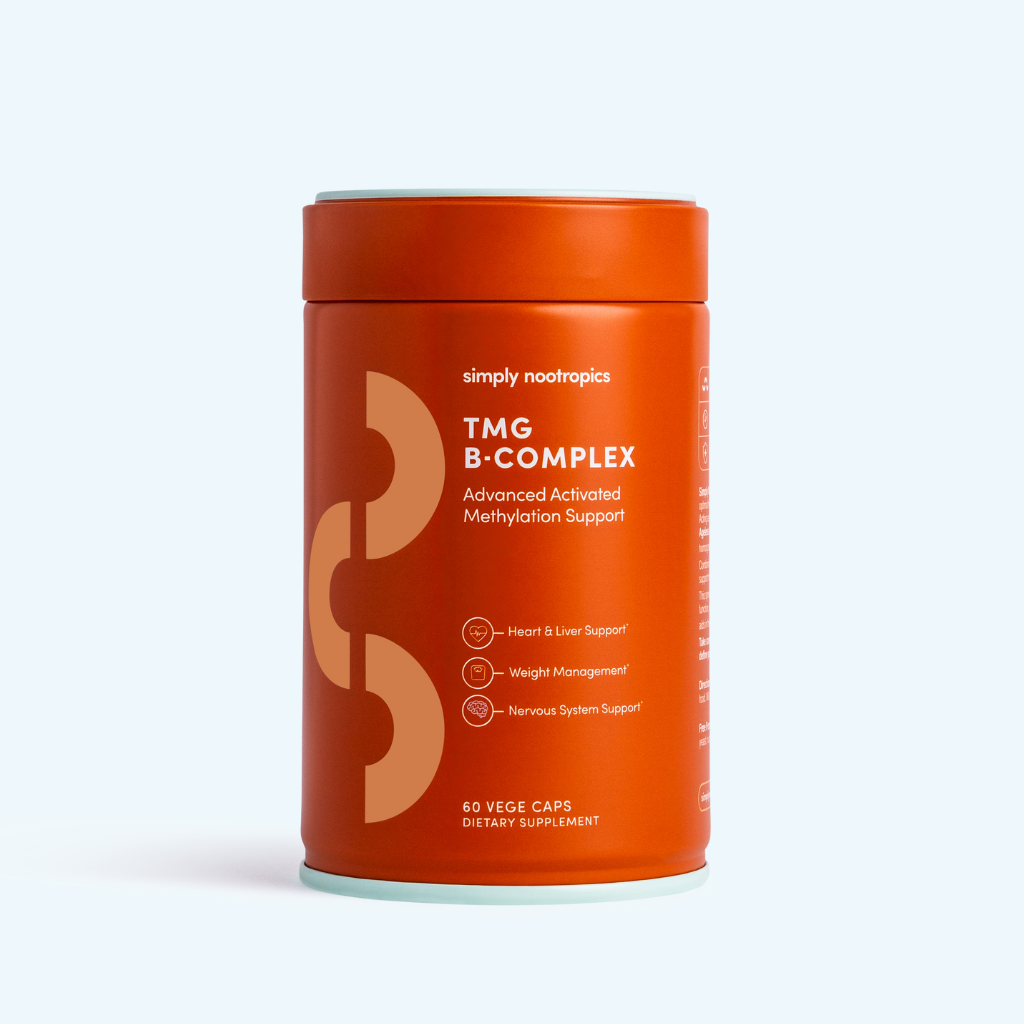
The answer involves your microbiome, inflammation, and a crucial process called methylation, all of which can be supported through lifestyle and targeted supplementation like TMG B-Complex.
The Gut-Heart Highway
Your gut is home to trillions of microorganisms, LIKE bacteria, fungi, and viruses, collectively known as your microbiome. These tiny inhabitants do far more than help digest food. They produce metabolites (chemical compounds) that enter your bloodstream and travel throughout your body, including straight to your heart.
Some of these metabolites are helpful. Others, not so much.
When your gut microbiome is balanced, it produces short-chain fatty acids that help reduce inflammation and support healthy blood vessel function. When it's out of balance - a state called dysbiosis – it can produce compounds that promote inflammation and increase cardiovascular risk.
One compound that's gained attention in recent years is TMAO (trimethylamine N-oxide). When you eat certain foods, gut bacteria produce TMA (trimethylamine), which your liver then converts to TMAO. High levels of TMAO have been associated with increased cardiovascular risk, though the full picture is still being researched.
The key point? What happens in your gut doesn't stay in your gut.
Inflammation: The Common Thread
Chronic inflammation is a major player in both gut dysfunction and heart disease. When your gut lining becomes compromised – often called "leaky gut" – it allows particles to pass through that shouldn't. Your immune system responds, triggering inflammation.
This inflammation doesn't just affect your digestive system. It's systemic, meaning it travels throughout your body via your bloodstream. When it reaches your cardiovascular system, it can contribute to atherosclerosis (the buildup of plaque in arteries), increase blood pressure, and affect heart function.
Your gut microbiome also plays a role in regulating this inflammatory response. A diverse, balanced microbiome helps maintain gut barrier integrity and keeps inflammation in check. A disrupted microbiome? That's when problems start.
The Methylation Connection
Here's where things get interesting – and where the connection between gut health and heart health becomes even more intricate.
Your body relies on a process called methylation for hundreds of essential functions, including cardiovascular health. Methylation helps regulate homocysteine, an amino acid that, at elevated levels, has been associated with increased cardiovascular risk.
B vitamins – particularly B12, B6, and folate – are crucial for healthy methylation. Fortunately, your gut health directly affects how well you absorb these vitamins.
If your gut isn't functioning optimally, you might not be absorbing enough B vitamins, even if you're eating them. Poor absorption can affect methylation, which in turn can impact cardiovascular health.
TMG (trimethylglycine, also known as betaine) can help. TMG acts as a methyl donor, supporting the methylation process. It works alongside B vitamins to help maintain healthy homocysteine levels.
Supporting Both Systems
So what can you do to support both your gut and your heart?
-
Feed Your Microbiome
Your gut bacteria thrive on fibre and diverse plant foods. The more varied your diet, the more diverse your microbiome tends to be. Think vegetables, fruits, legumes, whole grains, nuts, and seeds.
Fermented foods like yoghurt, kefir, sauerkraut, and kimchi can also support gut health by providing beneficial bacteria.
-
Manage Stress
Chronic stress doesn't just affect your mood – it directly impacts your gut. The gut-brain axis means stress can alter your microbiome composition, increase gut permeability, and trigger inflammation. All of which can affect your heart.
-
Move Your Body
Exercise benefits both your gut and your cardiovascular system. Physical activity promotes microbial diversity and supports heart health through multiple pathways.
-
Reduce Inflammatory Triggers
Processed foods, excess sugar, artificial additives, and chronic alcohol consumption can all disrupt your gut microbiome and promote inflammation. You don't need to be perfect, but being mindful helps.
-
Support Methylation
Given the connection between methylation, gut health, and cardiovascular function, ensuring adequate B vitamin intake matters. But remember – absorption is key, which brings us back to gut health.
Even with a perfect diet, compromised gut function can mean you're not absorbing enough of these crucial nutrients. And when your methylation pathway isn't functioning optimally, homocysteine levels can rise – a concern for cardiovascular health.
That’s why targeted supplementation bridges the gap.
Why TMG B-Complex?
TMG (trimethylglycine) is a powerful methyl donor that directly supports the methylation cycle. When combined with bioavailable forms of B6, B12, and folate, it provides comprehensive support for this crucial pathway.
TMG B-Complex was formulated specifically with this gut-heart-methylation connection in mind. Each serving provides:
-
TMG – supports healthy homocysteine metabolism and provides methyl groups for countless bodily processes
-
Methylated B vitamins – including methylcobalamin (B12), the active form your body can use immediately without needing to convert them first
-
B6 as P5P (pyridoxal-5-phosphate) – the active, bioavailable form that supports cardiovascular and neurological function
The methylated forms matter because they bypass the conversion step that some people struggle with due to genetic variations or gut issues. You're getting the nutrients in the form your body actually uses.
TMG B-Complex is all about giving your body the building blocks it needs when gut absorption might be compromised, when dietary intake isn't enough, or when your methylation pathway needs extra support.