



Longevity research often focuses on years or decades of data. But a growing body of evidence suggests that some of the most revealing signals about long-term health may be hiding in places scientists once overlooked, including a single night of sleep, the way ageing muscle adapts to dietary stress, and the biology of people who live well beyond a century.
-
A single night of sleep as a window into long-term health
Researchers at Stanford Medicine have developed an artificial intelligence system capable of analysing one night of detailed sleep data and estimating long-term health risks years before symptoms appear. The system, known as SleepFM, was trained on nearly 600,000 hours of overnight sleep recordings from around 65,000 individuals.
These recordings came from polysomnography, an intensive sleep assessment that simultaneously tracks brain activity, heart rhythms, breathing patterns, muscle movement, eye motion, and more. Traditionally, clinicians have used only a small portion of this information to diagnose sleep disorders. The rest was largely ignored.
That changed when researchers treated sleep data as a whole-body physiological snapshot.
By analysing how different signals align - or fall out of sync - across the night, the model identified subtle patterns that correlate with future health outcomes. Importantly, the strongest predictions didn’t come from one signal alone, but from mismatches between systems: for example, when brain activity suggested deep rest while cardiovascular signals indicated heightened strain.
The findings, published in Nature Medicine, reinforce a key idea in longevity science: coordination matters as much as individual performance.
Why sleep reveals more than we realised
Sleep offers a unique research environment. For several uninterrupted hours, the body operates without conscious interference, stress inputs, or behavioural noise. That makes it an unusually rich dataset for understanding baseline physiological function.
Rather than asking whether someone sleeps “well” or “poorly,” this new approach examines how systems communicate during rest. When those communications drift out of alignment, it may reflect deeper strain that accumulates silently over time.
This reframes sleep from a recovery tool into a diagnostic window, not for short-term fatigue, but for long-term resilience.
-
Ageing muscle adapts, but not the same way for everyone
A separate line of research highlights a similar theme: ageing outcomes depend less on single pathways and more on how the body adapts as a system.
Scientists studying ageing muscle tissue found that reducing overall energy intake triggered sweeping changes in muscle proteins that support how muscles manage incoming fuel and maintain responsiveness with age. What surprised researchers was that males and females achieved similar functional improvements through very different internal routes.
Roughly 70% of the molecular adjustments differed between sexes, even though the end result (improved muscle responsiveness) looked the same.
This finding reinforces a growing understanding in longevity science: there are multiple valid biological paths to the same outcome. Ageing doesn’t follow a single script, and resilience can be built through different internal strategies.
From a broader perspective, this suggests that long-term health isn’t about activating one “correct” pathway, but about maintaining flexibility across many.
-
A reminder that longevity also depends on early detection beyond the body
The same principle of early warning shows up outside the body, too, in how modern systems detect and prevent risk before harm occurs.
This week, Nestlé announced a precautionary recall of certain infant nutrition products across multiple European countries, after identifying a quality issue linked to an ingredient from a supplier. No illnesses were confirmed, and the recall was described as voluntary and preventive.
While this news sits outside traditional longevity biology, it reflects a parallel shift: moving from reactive response to proactive detection.
Just as AI tools are now identifying subtle physiological mismatches during sleep before symptoms appear, large-scale food systems are increasingly built around surveillance, testing, and early intervention, acting on weak signals rather than waiting for visible harm.
From a longevity perspective, this matters. Health outcomes are shaped not only by individual biology, but by the systems that support early-life nutrition, safety, and long-term resilience. Catching problems early reduces downstream risk and supports healthier trajectories over time.
-
Lessons from people who live past 110
Perhaps the clearest illustration of this systems-level resilience comes from research into supercentenarians - individuals who live beyond 110 years.
A recent synthesis examining Brazil’s uniquely diverse population highlights why these individuals are so valuable to longevity science. Unlike cohorts drawn from genetically homogeneous populations, Brazil’s admixed ancestry offers a rare opportunity to uncover protective variants and adaptive traits that might otherwise remain invisible.
Researchers studying Brazilian supercentenarians found:
-
Preserved immune function resembling much younger individuals
-
Robust protein maintenance systems
-
Functional resilience even in the absence of modern medical care
-
Effective responses to infections at extreme ages
Notably, some supercentenarians maintained clarity and independence well into their final years, suggesting that longevity is less about avoiding ageing altogether and more about resisting its most disruptive effects.
A note on foundational support
As longevity science moves away from “magic ingredients” and toward systems thinking, interest has grown in approaches that support core cellular processes consistently, rather than aggressively targeting one outcome.
This is where compounds involved in cellular energy pathways have drawn sustained research attention, not as instant solutions, but as part of long-term support strategies.
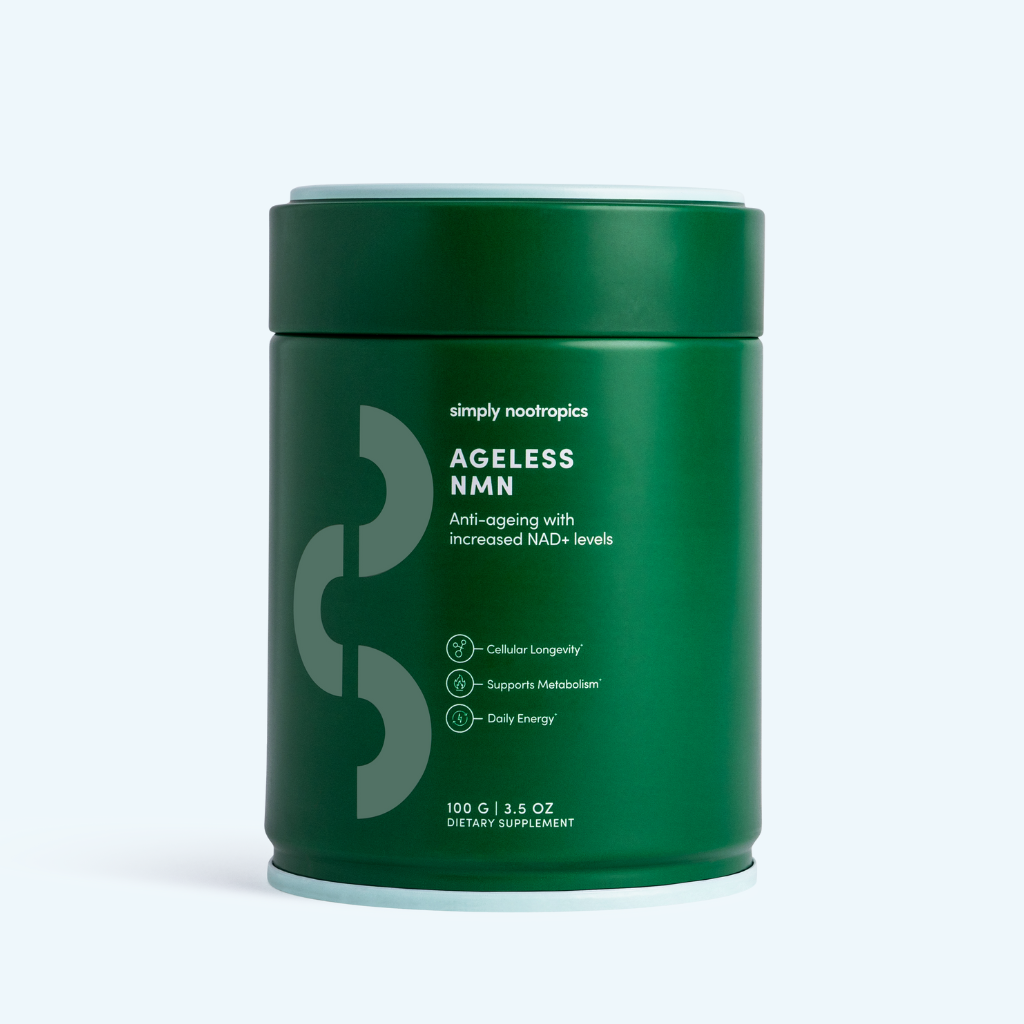
Ageless NMN is designed with that philosophy in mind. Rather than promising immediate effects, it fits into a daily routine aimed at supporting cellular energy processes that naturally change with age. When used consistently, alongside sleep, movement, and recovery, Ageless NMN aligns with the emerging scientific view that longevity is built through steady input, not sporadic optimisation.